26. April 2026
When Reupholstering an Antique Halves Its Value (and When It Doubles It)
We're going to write something here that most upholsterers never put in writing: sometimes, the best advice we can give you is to walk away from us, photograph what you've got, and ring an auction house first.
Reupholstery is brilliant. It saves furniture from landfill, transforms tired pieces into something you actually want to live with, and — done well — adds decades to the life of a frame. But on a small, specific category of antique furniture, putting it through a recover can wipe out thousands of pounds of value before the first staple goes in.
After more than thirty years in this trade we've seen both ends. The chair that doubled in price after we touched it. And the chair we politely talked the owner out of bringing us, because what they had was worth far more left alone.
Here's how to tell the difference before you commit.
The hidden value: what collectors are actually buying
When a serious collector or specialist dealer values an antique upholstered piece, they're not just looking at the timber and the fabric. They're reading the layers underneath like an archaeologist reads soil.
Original horsehair stuffing. Hand-tied eight-way springs. The original webbing pattern. Hand-stitched rolled edges that took two days to do properly. Maker's stamps on the bottom rail. And what dealers call "tack history" — the literal trail of every tack ever driven into the frame, telling the story of every recover the piece has been through over the last 150 years.
All of this is evidence. Evidence of age, of provenance, of craftsmanship. Strip it out and replace it with modern foam, serpentine springs and staples — even beautifully done modern foam, springs and staples — and you've removed the evidence. The chair will be more comfortable. It may look stunning. But to the right buyer at the right auction, it's now a chair that's been "modernised," which on certain pieces is collector code for "ruined."
When reupholstering halves the value (or worse)
Be very careful before reupholstering any of the following:
Pre-1830 pieces with original or early upholstery. Georgian and Regency chairs, sofas and stools where the original or early-19th-century stuffing is still present are historical objects. Even faded, torn, or partially perished original fabric can have museum interest. Don't touch these without an opinion from a specialist auctioneer.
Howard & Sons (and other named-maker) chairs. Howard chairs and sofas are the textbook example. The maker's stamp on the back leg, the brass castor markings, the original webbing — all of it is part of what people are paying for. A Howard club chair with original interior in tired-but-honest condition can sell for considerably more than the same chair "freshened up" with modern foam. Other names where this matters: Gillows, Hepplewhite, Sheraton, early Heal's, Morris & Co., Liberty.
Pieces with hand-tied eight-way springs in working condition. This is a craft skill that's vanishing. Original hand-tied springs that still hold tension are worth preserving and re-tying — never ripping out for serpentine springs or webbing.
Anything with hand-stitched rolled edges still intact. Two days of skilled work that no factory and very few modern shops will replicate. Visible from underneath when you turn the piece over.
Pieces where the original fabric, however knackered, is rare. Original horsehair-and-cotton damask, early Morris & Co. prints, original Liberty fabrics — these have textile-collector value independent of the frame.
The honest rule of thumb: if a piece is over 150 years old, has a recognisable maker's mark, or has visibly hand-stitched traditional construction underneath, get it appraised before you book any upholsterer — including us.
When reupholstering doubles the value
Now the good news, because most furniture isn't in the category above. For everything else, a proper reupholstery is one of the highest-return things you can do to a piece of furniture.
Mid-century British furniture: Ercol, Parker Knoll, G-Plan. These pieces have huge resale demand, but the original fabrics — usually wool tweeds or printed cottons from the 60s and 70s — are almost always shot. A torn, stained Parker Knoll wingback might sell for £80 on Marketplace. The same chair, frame restored, foam replaced, period-appropriate fabric, can comfortably fetch £400 to £600. We've seen Ercol studio couches go from £150 to over £1,000 with the right recover.
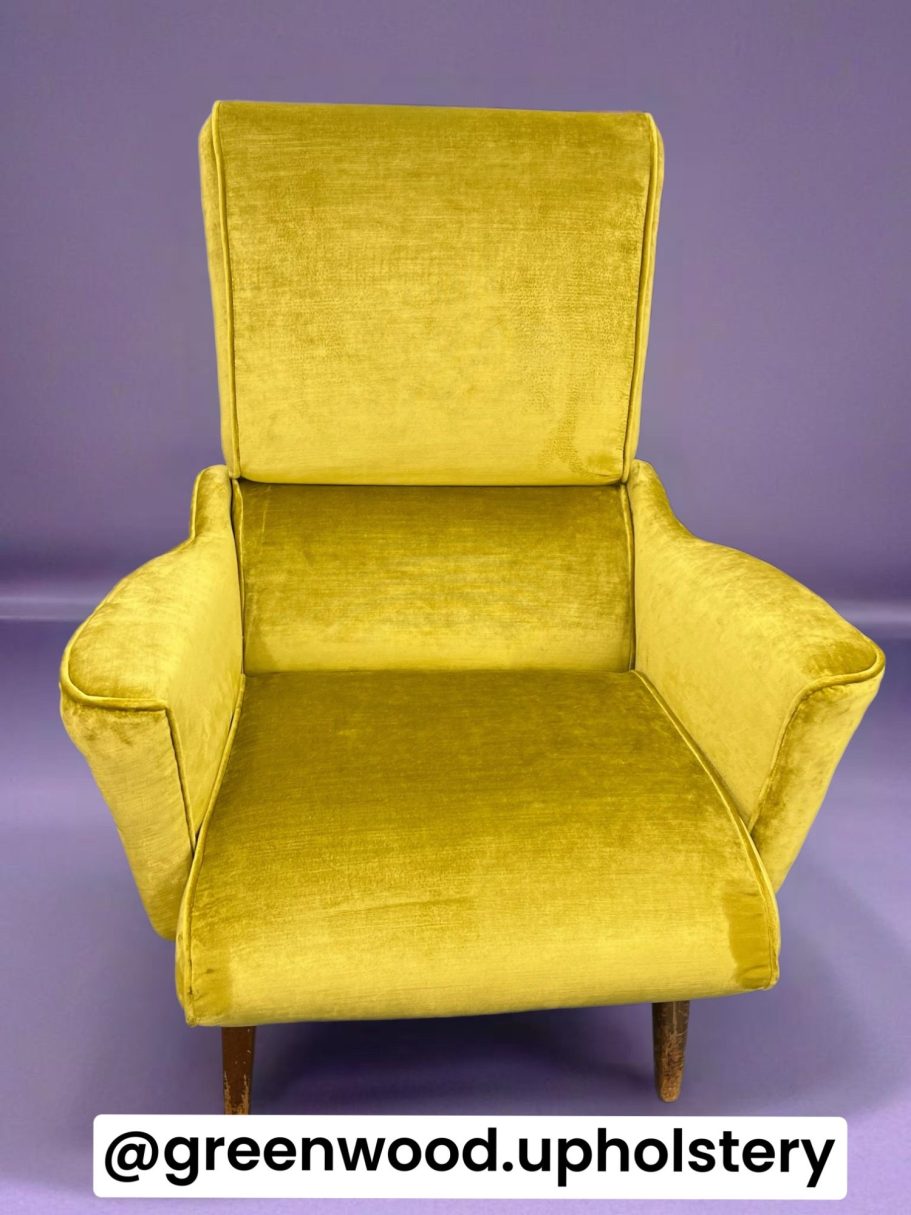
Designer pieces from 1950–1980 where the original fabric is already long gone. If a previous owner has already recovered an Eames, a Robin Day, or a Howard Keith piece in 1990s chintz, you're not destroying history — you're restoring it. Sympathetic, period-correct recovers genuinely add value here.
Sound antique frames with fabric beyond saving. A Victorian button-back nursing chair where the leather has perished to the point of unusability isn't going to sell as a "preservation piece" — it's going to sell as firewood. Properly traditional reupholstery (horsehair, hand-tied, hand-stitched edges) by an accredited shop on a sound frame can transform an unsaleable carcass into a piece worth four figures.
Anything intended to be lived with rather than sold. This is the honest one. If you've inherited your grandmother's chair and you want to use it for the next thirty years, the "value" question is largely irrelevant. Comfort and longevity matter more than auction prices. We do this work all the time and it's some of the most rewarding work we do.
How to tell which category you're in
Before you book any upholsterer, including us, do these four things:
Turn the piece upside down. Photograph the underside. Look for stamps, branded marks, paper labels, pencilled signatures, and the pattern of the webbing. Howard & Sons chairs have brass castor markings and stamps on the back leg. Many quality Victorian and Edwardian pieces have maker's labels glued to the frame.
Look at how the springs are held in. Hand-tied eight-way springs with twine running in a pattern across the top is traditional construction worth preserving. Serpentine zigzag springs or rubber webbing means it's already been modernised at some point — you've less to lose.
Photograph any visible original fabric, even tiny scraps tucked under braid or piping. Send the photos to a specialist textile dealer or auction house. It takes ten minutes.
Ask an auction house for a free valuation. Bonhams, Tennants here in Yorkshire, and most regional auctioneers offer free verbal valuations from photos. If the piece is worth real money in original condition, they'll tell you. If it's not, you've lost nothing.
Only after those four steps should you be ringing an upholsterer.
What "doing it right" looks like
If your piece does belong firmly in the reupholstery category, the quality of the work is what determines whether you've added value or just delayed the next recover.
The signs of a value-adding reupholstery: the same number of layers as the original, traditional materials where traditional construction was used, hand-stitched edges preserved or recreated, original frame timber untouched by new tack holes or staples, webbing replaced like-for-like, fabric appropriate to the era of the piece.
The signs of a value-destroying recover: foam where horsehair was, staples driven into original frame timber, hand-tied springs ripped out and replaced with elastic webbing, modern fire-retardant labels nailed onto period frames, generic upholstery-weight fabric on a piece that originally wore silk damask.
This is partly why AMUSF accreditation matters. The Association of Master Upholsterers and Soft Furnishers exists precisely because the difference between these two outcomes is invisible to most customers until ten years later, when one piece is still beautiful and the other is back on the workbench.
The honest summary
If your piece is pre-1830, by a known maker, has hand-tied springs, or has visibly traditional construction underneath — get it valued before you touch it. We'd rather lose the job than be the people who halved the worth of your grandmother's Howard chair.
For everything else — the Ercols, the Parker Knolls, the G-Plans, the unmarked Victorian carcasses, the inherited armchairs you actually want to sit in — properly done reupholstery is one of the best things you can do for the piece. It saves it from landfill, restores its function, and on the right piece in the right hands, genuinely adds significant value.
If you're not sure which category yours is in, send us a few photos before you book anything in. We'll tell you honestly. Sometimes the best advice we can give costs us a job — but it's the advice we'd want our own family to get.
Shaun & Pat, Greenwood Upholstery — Hebden Bridge. AMUSF accredited, 30+ years in the trade. pat@greenwoodupholstery.com