26. April 2026
Cat Scratched Your Sofa? What Can Actually Be Saved (And What Can't)
Pet damage is one of the most common reasons people get in touch with us, and one of the most awkward conversations to start. Nobody wants to admit their cat has reduced one arm of an otherwise lovely sofa to ribbons, or that their puppy ate a corner. So let's just say it plainly: we see this all the time, the damage is almost always more fixable than people fear, and the cost is almost always less than replacement. Here's an honest guide to what can be done.
The most common types of pet damage
Almost every pet damage job we see falls into one of five categories. The fix depends entirely on which one you've got.
1. Cat scratching on the front arm panels
This is by far the most common. Cats scratch vertically on fabric or leather to mark territory and shed claw sheaths, and the front of a sofa arm is at perfect height. The damage is concentrated on one specific panel — usually the outside front face of the arm — and the rest of the sofa is untouched.
What can be done: almost always a "panel replacement" or "outside arm recover." We remove just the affected panels (often both arms for symmetry) and re-cover them in matching or contrasting fabric. The rest of the sofa is left alone. This is the cheapest possible repair on a piece that otherwise looks fine.
2. Shredded piping along the front edge
The decorative piping (the little fabric-covered cord that runs along the seam at the front edge of arms and seats) is essentially a cat-shaped target. Once one strand is loose, cats pull it like a ribbon and the whole length unravels.
What can be done: piping can be replaced as a discrete repair if the surrounding fabric is intact, but if there's also general scratch damage to the panel it usually makes more sense to recover the whole panel and re-pipe it at the same time. Going forward, choosing a sofa with no piping (or self-piping in a tougher fabric) almost eliminates this problem.
3. Dog chewing on corners and feet
Puppies, mostly. Adult dogs occasionally if they're anxious. The damage is concentrated at chewing height — front feet of the sofa, the bottom corners, sometimes the lower edge of the front skirt — and tends to involve actual missing chunks rather than just surface damage. Wood underneath may also be gnawed.
What can be done: fabric replacement on the affected lower panels, plus we can usually sand and refinish wooden feet that have been chewed (or replace them if they're a standard turning). Hidden damage to the frame can sometimes need a minor structural repair, which we'll spot when we open it up.
4. Surface staining and dribble damage on arms
Mainly dogs that rest their head on the sofa arm — the saliva and natural oils break down most fabric finishes over time, leaving a dark, slightly greasy patch that's almost impossible to clean out properly. Cats also do this on a smaller scale on the spot they sleep on every day for years.
What can be done: the affected fabric panels can be replaced in isolation if the rest of the sofa is in good nick. If the staining is widespread (multiple panels, both arms, seat cushions) a full recover is usually more sensible.
5. Total devastation
The honest one. Sometimes a cat has been left alone with a fabric sofa for several years and the damage is essentially everywhere — three arms shredded, sides shredded, even the back panels clawed. At this point spot repairs don't make sense and a full reupholstery is the only realistic route.
What can be done: full reupholstery, but this is also the moment to have a serious think about fabric choice. There's no point putting the same fabric back on if you've still got the same cat.
Real prices for pet damage repairs (UK 2026)
Type of damageTypical costSingle arm panel replacement (one side)£140-£260Both front arm panels (matched)£260-£440Piping replacement (per metre, with surrounding fabric)£35-£70Lower front panel and chewed feet refurb£180-£380Single seat cushion recover£90-£180Full sofa reupholstery (when damage is widespread)£900-£1,800 — see our sofa cost guide
Fabric is on top of these prices for full recovers. Spot repairs already include the small amount of fabric needed.
The fabrics that actually survive cats and dogs
If we're recovering a sofa for a pet household, the fabric choice is what determines whether the same conversation happens again in three years. There's no genuinely "petproof" fabric — anything can be destroyed by a determined cat — but there's a clear hierarchy from "almost certainly fine" down to "actively asking for trouble."
Best for cats
- Performance microfibre and faux suede. Tight weave, no loops for claws to catch in, easy to vacuum and brush. The current best-in-class for cat households.
- Crypton and similar engineered fabrics. Built specifically for stain and scratch resistance, with woven backing that resists puncture. Pricier but worth it if cats are the main concern.
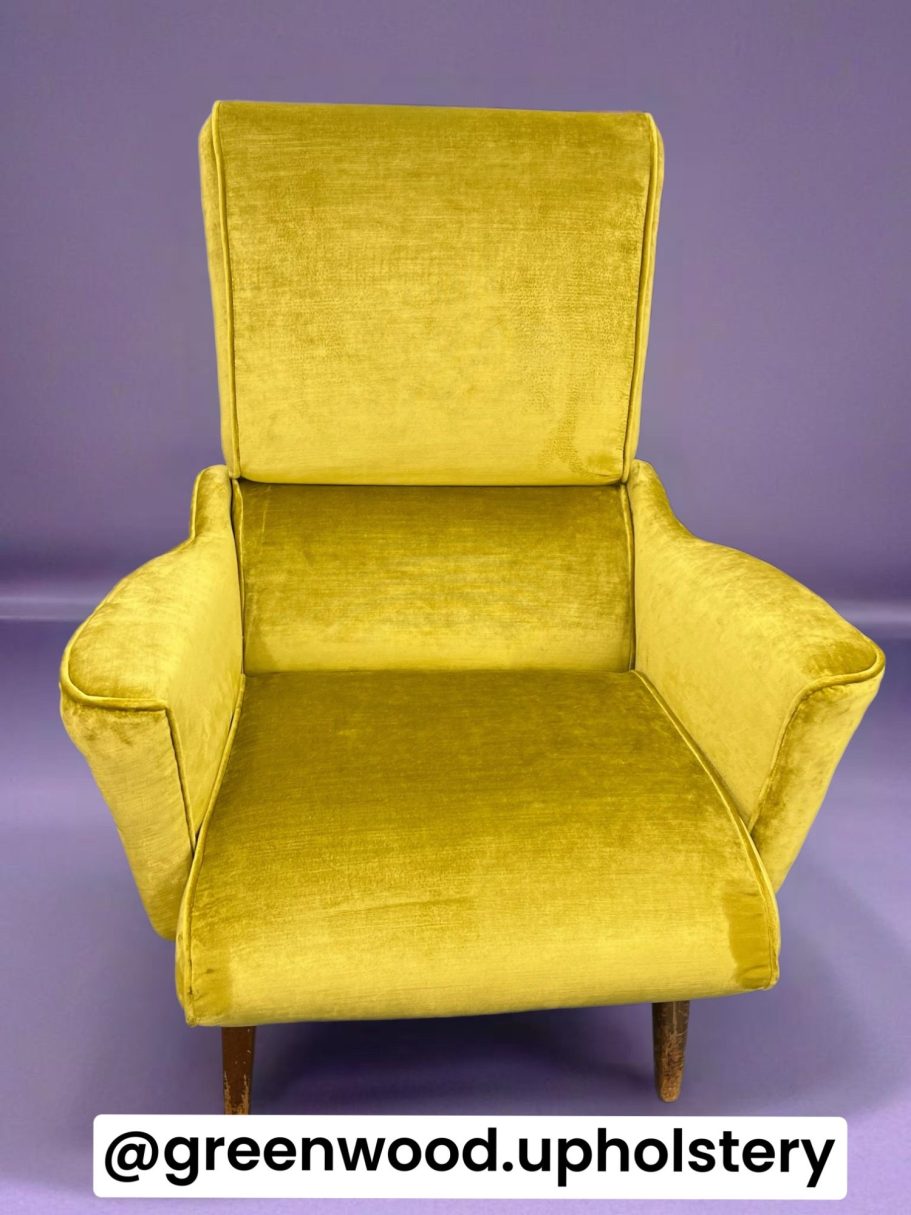
- Velvet (genuinely). This surprises people. Tightly woven velvet has no loops to catch on, and cats often dislike the texture. Many cat owners report their cats simply ignore velvet sofas after one or two attempts. Not all velvets are equal — the synthetic, tightly woven kind is what works.
- Real leather (the proper stuff, not bonded — see our bonded leather guide). Most cats won't scratch real leather because there's no give and no satisfying claw hook. The few that do leave fine surface scratches that often patina out.
Best for dogs
- Tight-weave performance fabrics with high Martindale rub counts (40,000+ for heavy domestic use). Resists abrasion from claws and paws.
- Microfibre and faux suede. Hair brushes off easily, dribble is wipeable.
- Real leather. Easy to wipe down, resists hair, doesn't hold odour. The only caveat is that puppies and chewers can do real damage to leather corners.
Avoid in pet households
- Loose weaves and bouclé. Every loop is a claw target. Bouclé especially — beautiful fabric, terrible choice for cats.
- Linen and natural slubby fabrics. Snag easily, stain easily, hold pet hair like Velcro.
- Chenille. The fluffy yarns pull out in strands once a cat starts.
- Cheap printed cottons. Wear through quickly under repeated paw traffic.
The Martindale number you actually want
Every upholstery fabric is rated for abrasion resistance using the Martindale test (a small swatch is rubbed in figure-of-eight motions until it wears through). For a pet household, look for a Martindale rating of 40,000 cycles or higher. For a household with multiple pets or large dogs, push for 50,000+. Domestic-grade fabrics often come in at 15,000-25,000 — those are fine for a quiet living room but they don't survive serious pet traffic.
Why it's almost always cheaper than buying new
A new mid-range three-seater sofa in the UK is £1,200-£2,500. A pet damage repair on an existing well-built sofa is £140-£440 for spot work, or £900-£1,800 for a full recover that includes any underlying foundation work. Either way, you keep the sofa you already chose, in the dimensions that already fit your room, and avoid sending a perfectly sound piece of furniture to landfill. We've covered the broader cost picture in our reupholster vs buy new guide.
The harder conversation
Sometimes people get in touch with us hoping we'll fix the damage so it looks like the cat never happened, and then ask us to put the same fabric back on. We'll do whatever the customer wants — but we always say honestly: if the cat's still got claws and the new fabric is the same loose-weave linen they destroyed last time, we'll be having the same conversation in two years. The repair only works long-term if at least one of three things changes: the fabric, the cat's access, or the cat's claws (regular trims help more than people think).
None of that is judgement. We have pets too, and we've seen what they're capable of. It's just an honest version of the conversation that most upholsterers won't have with you up front.
Got pet damage on your sofa?
Send us a few close-up photos of the worst patches, and a wide shot of the whole sofa. We'll tell you honestly whether it's a small spot repair, a full recover, or genuinely time to start again — with realistic prices either way.
📩 Email photos to pat@greenwoodupholstery.com
📞 Or call us on 07882 014449
Free quotes within 24 hours, no obligation. Greenwood Upholstery is an AMUSF-accredited workshop based in Hebden Bridge, serving Calderdale, West Yorkshire and beyond.
Greenwood Upholstery · AMUSF accredited · Hebden Bridge, West Yorkshire